
Marriage as Negotiated Power
The Canterbury TalesThis flow compares marriages and vows across the collection, tracing the struggle between sovereignty, service, autonomy, and fidelity.
increasing Bearing strength in each event
 decreasing
Bearing strength in each eventdecreasingEmily’s Forced Choice
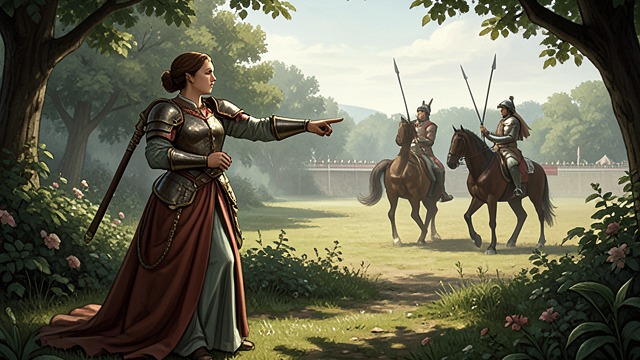
Emily’s Forced Choice
Political Marriage
Theseus decides that Emily must marry the victorious lover. Her feelings are secondary to the political need to settle rivalry.
Stability Through Union
The marriage ends public conflict, but it also reveals how female consent is absorbed into male governance.
Griselda’s Submission
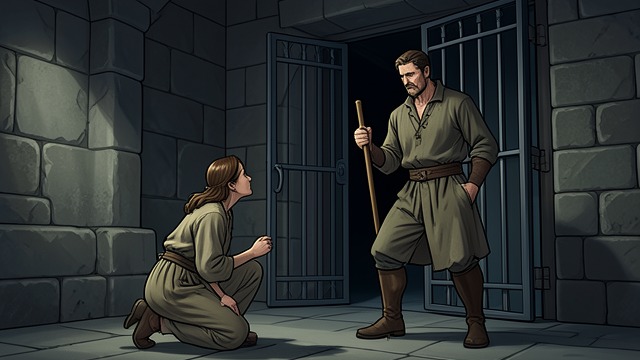
Griselda’s Submission
Absolute Obedience
Griselda promises not to resist Walter’s will. Her marriage treats obedience as the foundation of security.
Moral Cost
The promise enables Walter’s experiments and leaves her without a legitimate means of protest. Patience becomes both strength and vulnerability.
Dorigen’s Liberty
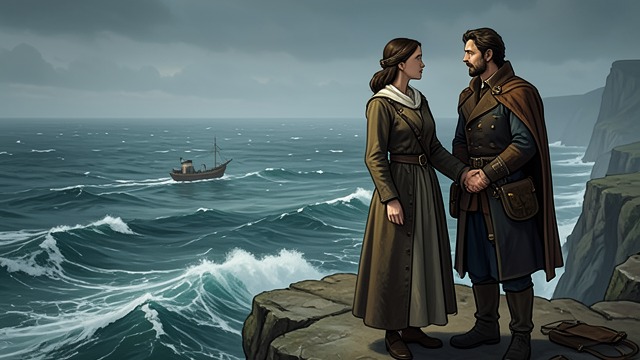
Dorigen’s Liberty
Mutual Sufferance
Arveragus refuses jealous mastery, and Dorigen promises fidelity freely. Their marriage defines sovereignty as public appearance rather than private domination.
Love Without Ownership
The arrangement makes affection durable because neither partner treats the other as property. Its ideals later face a literal test.
The Impossible Vow
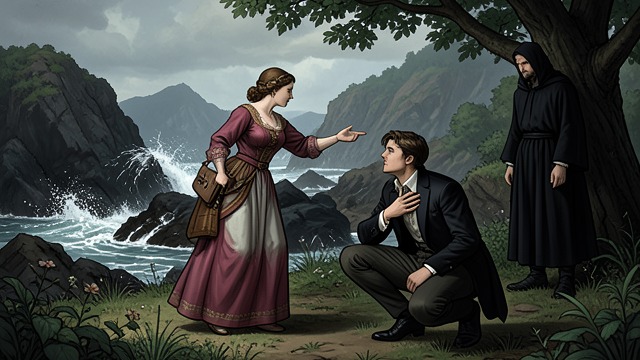
The Impossible Vow
Playful Speech
Dorigen offers Aurelius a condition she believes cannot occur. Her words are meant to end courtship without surrendering fidelity.
Literal Consequence
Natural magic makes the impossible appear real. The episode shows how language can create obligations beyond intention.
Merciful Release
Merciful Release
Three Voluntary Renunciations
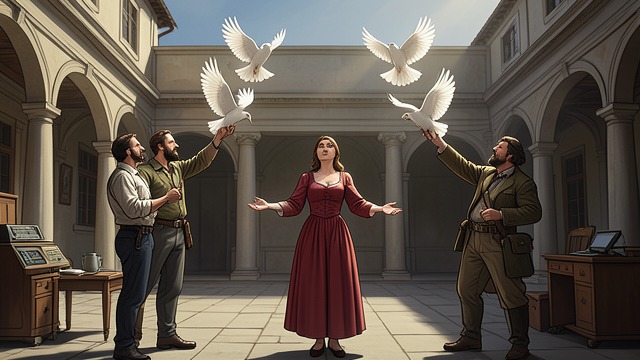
Arveragus releases Dorigen, Aurelius releases Dorigen, and The Magician releases Aurelius. Each man gives up a claim he could enforce.
Ethical Reciprocity
Marriage, courtship, and commerce become honorable only when power is voluntarily limited. The tale defines nobility as the ability to free another person.
After the tournament settlement
At Walter’s marriage proposal
At her marriage to Arveragus
During the garden conversation in May
Near the ending of The Franklin’s Tale
